
Five Takeaways from AACVPR 2026 Annual Meeting
Five takeaways from AACVPR's 41st Annual Meeting in San Antonio, plus the partner outcomes we shared at our Friday symposium.

The Aviary team spent three days with the CR/PR community at AACVPR's 41st Annual Meeting in San Antonio. Thank you to everyone who spent time with us at our booth, our happy hour and our Friday lunch symposium. Here's what we took away from this year's event.
The conversation has changed from validating virtual rehab to how to reach every eligible patient.
A recurring theme across sessions at AACVPR 2026, San Antonio

What We Heard in San Antonio
CR/PR Teams Are Proud of Their Work and Eager for What's Next
The clinicians we met care deeply about their patients and their programs. They came to San Antonio to learn new guidelines and best practices they can take home to their communities.
AACVPR's first goal in its 2026–2028 strategic plan is to raise awareness of the value of CR/PR among patients, clinicians and the public. The plan also aims to strengthen AACVPR as the field's professional home. These objectives found their voice in the sessions:
- Telling the field's story: “From Anecdotes to Advocacy: Leveraging Strategic Communication for Cardiopulmonary Brand Recognition”
- Advocacy as a professional duty: “Every Voice Counts”
- The roles that define the profession: “What's in a Name?” and “Re-Examining the Role of Nurses on the Rehab Team”
Everyone Wants More Patients in Rehab
The shared goal is clear: patients who qualify should know about rehab, show up and get the full benefit. But many of you told us that you're already stretched on staff and space.
The road ahead is long: nationally, only about one in four eligible patients takes part in cardiac rehab, far short of the Million Hearts goal of 70%.
Conference sessions equipped us with tactics on a statewide participation model, enrolling more women, keeping patients engaged (“They Show Up… Then Disappear”) and retaining your rehab staff.
Virtual Interest Is High, but Most Programs Are Still Early
The common view is that virtual is the clearest path to reaching more patients, especially now that Medicare allows virtual supervision and pays for in-home virtual rehab. The conversation has moved from whether to how. Programs are asking how to:
- Run virtual as an extension of their in-person services
- Protect clinical quality and continuity of care
- Manage referrals so each patient lands in the right setting
AACVPR's strategic plan commits to a professional certificate in virtual/hybrid delivery, certification pathways, and implementation toolkits. Their journal (JCRP) published a consensus statement in late 2025 to “ensure high-quality care across all settings.”
Now Is the Time to Demonstrate Virtual's Value
Several presenters said the field has a responsibility to use today's favorable Medicare reimbursement. Doing so shows CMS that patients want this access and will use it. It also shows that virtual and hybrid programs can meet the same quality standards as center-based care.
AACVPR encourages programs to expand virtual and hybrid services. Its strategic plan commits to advocating for coverage and payment policies that support them. Thursday's general session covered Medicare rules and regulations.
ICR Is a Big Opportunity, and the Field Wants Guidance
ICR gives patients a structured program that goes beyond exercise, building up nutrition, stress management and lasting behavior change. For programs, it's a way to get paid for more of that work.
- Health systems already running ICR told us it's working
- Many attendees were excited about the MGB Benson-Henry model
- The clear need is for plain education on ICR options, how they differ, and which fits each program
AACVPR's agenda featured nutrition, mental health, sleep and tobacco cessation. Their strategic plan calls for business education (including P&L) and tools to show program value. ICR is included in Medicare's in-home virtual coverage.

Our Symposium on Friday
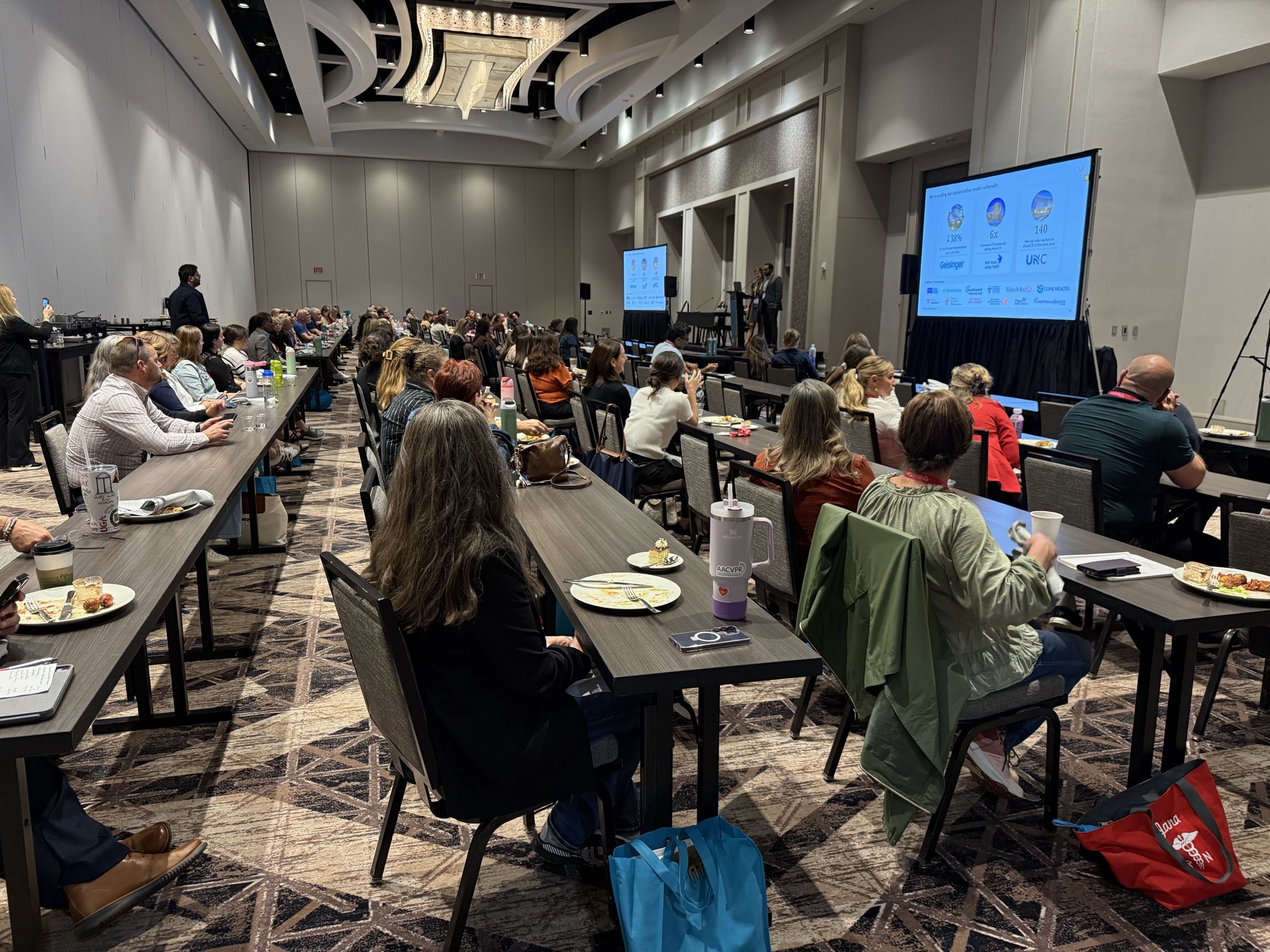
At our Friday lunch symposium we presented From Referral to Rehab: Building Programs that Scale. In this presentation we shared outcomes from 3 high profile health system partners and discussed technical and operational best practices that we've learned and built into our platform.
Partner Outcomes
Geisinger
- 4x growth in program volume
- 38% Reduction in 1 year readmissions (all cause)
- 44% Reduction in ED admission
- 16% lower total cost of care at 1 year
Beth Israel Lahey Health
- 6x growth with Virtual + In-Person CR
- 1,000+ Additional referrals per month
- 70 sessions per graduating patient on average
UNC
- 140 New zip codes reached via virtual CR
Platform Workflow Demo
Attendees saw how the Aviary platform reduces admin work by managing referrals, enrollment, virtual visits, and care team coordination — from initial patient referral through program completion.
Continue the Conversation
If these takeaways resonate with the challenges your program faces, we'd welcome the chance to talk through what virtual, in-person, and hybrid care could look like for your health system.
Recommended articles

Aviary Health and Cardiology Associates of Mesa (CVAM) partner on virtual cardiac rehabilitation
Aviary Health Partners with Advanced Heart and Vascular Institute of Hunterdon to Enhance Cardiac Care


